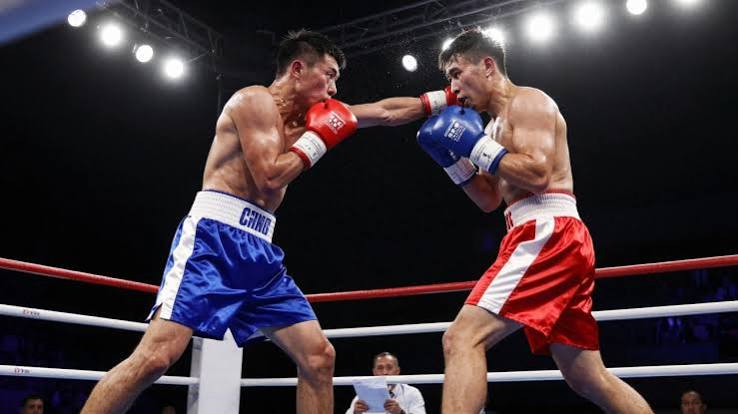

Boxing is often reduced to a simple question: who landed more punches? That measure is easy to understand, but it does not reflect how most bouts are actually judged. A fighter can throw more, land more, and still lose if the other boxer lands cleaner shots, controls the exchanges, defends well, and wins more rounds under the scoring criteria.
This is why raw punch statistics should be treated as supporting information rather than a final verdict. The same distinction exists in other forms of entertainment, including products such as the crazy time app, where a visible count or sequence does not explain every factor behind an outcome. In boxing, judges evaluate the quality and context of exchanges, not simply the total number of gloves that make contact.
Boxing Is Scored Round by Round
The first reason punch totals can mislead is that boxing is usually scored one round at a time.
A fighter may dominate three rounds by a large margin and land many punches during those periods. The opponent may then win six other rounds by smaller margins. At the end of the bout, the first boxer could still have the higher total punch count while losing more rounds.
This is a basic mathematical feature of round-based scoring.
Suppose Fighter A lands 30 punches in each of three rounds and 10 in each of the remaining rounds. Fighter B lands 15 punches in those first three rounds but 16 in the other rounds. Fighter A can finish with more total connections, yet Fighter B may have done enough to win most of the individual rounds.
Clean Punching Matters More Than Mere Contact
Not every landed punch has equal scoring value.
A jab that brushes the shoulder is different from a straight punch that lands cleanly on the head. A partially blocked hook is not the same as a shot that reaches the target without defensive interference.
Judges look for effective, clean punching. This means they consider whether a punch lands on a legal scoring area, whether it connects with the knuckle portion of the glove, and whether it has a visible effect on the opponent.
Punch-count systems can record contact without fully capturing these differences. They may also classify some blocked or glancing shots differently from how a ringside judge perceives them.
As a result, two fighters can have similar punch totals while producing very different scoring impressions.
Punch Quality Can Outweigh Punch Volume
A high-volume fighter may land many jabs and short punches, while an opponent lands fewer but more damaging combinations.
Judges do not award points based on damage alone, but the effectiveness of clean punches matters. A punch that stops an opponent’s advance, breaks posture, or forces a defensive response can carry more significance than several light touches.
This is especially relevant when comparing volume punchers with counterpunchers.
A counterpuncher may throw less because the strategy depends on waiting for openings. If those counters are accurate and land during the opponent’s attacks, they can define the round even when the raw numbers favor the busier fighter.
Activity and effectiveness are therefore not the same thing.
Defense Changes How Offense Is Evaluated
Boxing is not only about hitting. It is also about avoiding being hit.
A fighter who slips, blocks, parries, or moves away from attacks can reduce the effectiveness of an opponent’s offense. Good defense can also create immediate counterpunching opportunities.
This matters because high punch volume may include many attempts that fail.
A boxer can throw 80 punches in a round and land 15, while the opponent throws 35 and lands 14. The first fighter has a higher activity level, but the second may have shown better accuracy and defensive control.
Judges evaluate what happens during exchanges rather than rewarding work rate automatically.
High volume becomes valuable when it produces effective offense, not when it consists mainly of missed or blocked punches.
Ring Control Can Influence Close Rounds
When clean punching is close, judges may consider which fighter controls the geography and pace of the bout.
Ring control does not simply mean moving forward. A fighter can control a round while moving backward if that movement forces the opponent into poor positions and creates countering opportunities.
Likewise, constant forward pressure has limited value if the advancing fighter repeatedly walks into punches.
Effective ring control involves making the fight occur under favorable conditions. One boxer may dictate distance with a jab. Another may cut off the ring and force exchanges at close range.
This dimension is difficult to express through punch statistics because it concerns where and how the exchanges occur.
Aggression Must Be Effective
Aggression is often misunderstood by spectators.
The fighter who moves forward may appear to be doing more, but forward movement alone does not win rounds. Aggression becomes useful when it leads to scoring opportunities and limits the opponent’s options.
A boxer who pressures constantly but misses punches can lose to an opponent who gives ground while landing counters.
This distinction explains why some decisions appear surprising to viewers who focus mainly on who was advancing.
Judges are expected to evaluate effective aggression, not movement without results.
Knockdowns Change the Scoring Balance
A knockdown can have a large effect on a round even if the boxer who scores it lands fewer total punches.
In many scoring systems, a clear knockdown can turn what might have been a close round into a wider score. Multiple knockdowns can increase that difference further.
This creates another situation in which punch totals fail to explain the result.
A boxer may outland an opponent over three minutes but suffer a knockdown from one well-timed shot. The opponent can therefore win the round despite lower activity.
The same principle applies across a full bout. A few high-impact moments can alter scorecards more than dozens of low-impact punches.
Timing Changes the Meaning of a Punch
When a punch lands can matter almost as much as how often punches land.
A clean counter that interrupts an attack demonstrates control of the exchange. A combination in the final seconds of a close round can also influence the judge’s impression because it is recent and visible.
This does not mean late punches formally count more. They do not. But judging is performed by humans observing fast exchanges in real time.
Clear moments are easier to recognize than minor contact spread across the round.
Fighters who produce distinct scoring sequences can therefore create a stronger impression than opponents whose offense consists of many less obvious touches.
Punch Statistics Have Measurement Limits
Punch statistics are estimates rather than perfect records.
Different observers may disagree about whether a punch landed cleanly, partially connected, or was blocked. Fast combinations are especially difficult to classify in real time.
Statistics also cannot fully describe balance, defensive reactions, ring position, or the force behind individual punches.
For this reason, numbers are useful when analyzing a fight after the event, but they should not be treated as an alternative scoring system.
A total such as 140 punches landed against 125 tells only part of the story. Analysts still need to ask which rounds those punches occurred in and how effective they were.
Winning Boxing Requires More Than Being Busy
Punch volume is important because fighters cannot score without attacking. However, throwing and landing more punches does not automatically mean winning the contest.
Boxing rewards effective work within individual rounds. Clean punching, defense, control, aggression, knockdowns, accuracy, and tactical execution all shape how judges interpret the fight.
This is why a lower-volume boxer can legitimately defeat a busier opponent. The key question is not simply who landed more over the entire bout, but who performed the more effective work in enough rounds to build the stronger scorecard.
Punch counts can help explain a match. They cannot, by themselves, determine its winner.