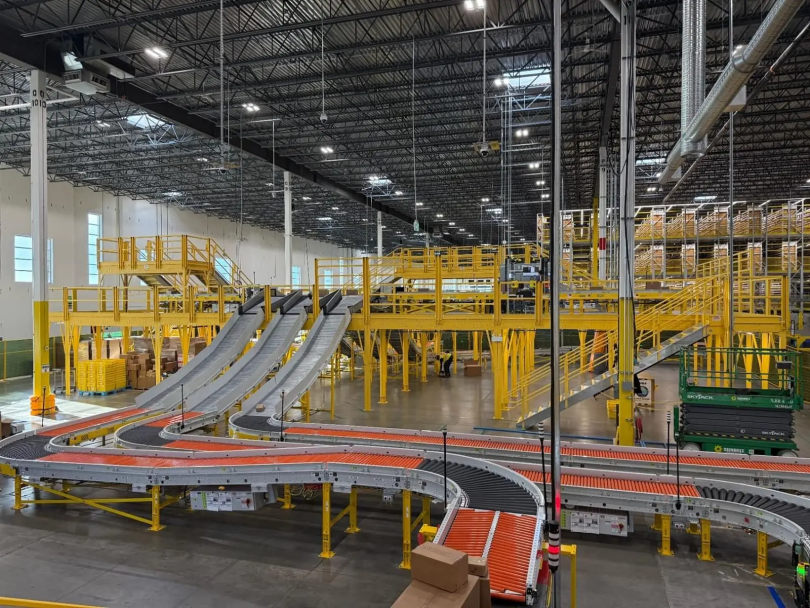

Order volumes climb every year, but most warehouses aren’t built to keep pace with them. Staffing is tighter, customers expect faster turnaround, and the margin for error on shipping accuracy keeps shrinking. That’s the real reason more operations are turning to automated sortation instead of relying on people to sort packages by hand. A conveyor company that understands both the mechanical and operational side of this shift can make the difference between a smooth rollout and a system that’s outdated the moment it’s installed.
Sortation used to be something only the largest distribution centers bothered with. That’s changed. Mid-sized operations are now hitting the same order volumes that used to be reserved for national retailers, and their facilities weren’t designed for that kind of throughput.
The Problem With Manual Sorting
Manual sorting works fine when volume is low and SKU counts are manageable. Once either of those grows, the cracks start showing.
Workers get tired. Mistakes happen during peak shifts. Mis-sorted packages mean returns, angry customers, and wasted labor fixing something that shouldn’t have gone wrong in the first place. And during seasonal spikes, finding enough temporary staff to sort manually is its own headache.
None of this is a labor problem you can solve by hiring more people. It’s a structural problem with how the facility processes orders.
There’s also a hidden cost most operators don’t track closely enough: the time it takes to retrain seasonal staff every single year on sorting logic that changes as your SKU mix grows. That retraining cycle eats into productivity right when you need it most, during the exact weeks volume is highest.
What Conveyor Sortation Actually Solves
A sortation system takes that repetitive, error-prone task off people’s plates and routes packages automatically based on destination, size, weight, or shipping method. The obvious win is speed. The less obvious win is consistency a conveyor doesn’t get tired at hour ten of a shift.
There’s also a space argument that doesn’t get talked about enough. Manual sort areas eat up floor space that could otherwise be used for storage or staging. Automated sortation tends to have a smaller footprint relative to the volume it handles, which matters a lot in facilities that are already tight on square footage.
For growing operations, sortation isn’t really an upgrade. It’s closer to a requirement once volume crosses a certain threshold usually earlier than most operators expect.
It’s Not Just About Speed
A lot of warehouse operators assume automation is purely about moving faster. Speed matters, but accuracy is where sortation earns its cost back. Every mis-shipped order costs money twice once to ship it wrong, and again to fix it.
Sortation systems also make labor planning more predictable. Instead of scaling headcount up and down with order volume, you’re scaling a system that runs at a consistent rate regardless of how tired anyone on the floor is that day.
This is also where facility layout starts to matter more than people expect. Sortation isn’t a standalone piece of equipment it has to work with your racking, your dock doors, and your overall flow. That’s part of why more operators are pairing automation projects with design build construction work rather than treating them as separate decisions. Trying to bolt a sortation system into a layout that wasn’t designed for it usually means compromises that show up later as bottlenecks.
Where This Gets Complicated
Not every warehouse needs a full sortation system, and it’s worth being honest about that. If your SKU count is low and volume is steady, a simpler conveyor setup might do the job without the added cost and complexity.
The mistake a lot of operators make is buying more automation than they actually need, based on what a vendor is selling rather than what their operation actually requires. Sortation makes sense when order complexity, SKU variety, or shipping destinations start creating real bottlenecks. If that’s not where you are yet, spending on it early just ties up capital that could go somewhere more useful.
On the flip side, waiting too long has its own cost. Facilities that delay automation often end up retrofitting under pressure, during peak season, when there’s no room for downtime or trial and error.
There’s a middle ground a lot of operators miss too. You don’t have to jump straight from manual sorting to a fully automated system in one move. Phased approaches starting with basic conveyor sortation and adding complexity as volume justifies it let you test what actually works for your operation before committing to a bigger capital outlay. It’s a more realistic path for facilities that are growing fast but don’t have unlimited budget to work with.
Planning Before You Buy
The facilities that get the most out of sortation are the ones that plan for it before volume forces their hand. That means looking honestly at order trends, not just current volume, and figuring out where the next twelve to twenty-four months are headed.
It also means involving people who understand both the equipment and the building it’s going into. A sortation system installed without accounting for dock flow, racking layout, or future expansion tends to become a limitation instead of a solution within a couple of years.
This is where a lot of projects go sideways not because the equipment is bad, but because it wasn’t planned around how the facility actually operates day to day. Getting an outside assessment before committing to a system can save a lot of rework later. If you’re weighing options for your own facility, it’s worth talking through your specific volume and layout before settling on a system. You can get in touch with a team that’s done this enough times to know where the common mistakes happen.
What to Look For in a Sortation Partner
Equipment specs matter, but they’re not the whole story. The bigger question is whether the company installing your system understands how it fits into your broader operation racking, dock scheduling, staffing patterns, and growth plans included.
A vendor that only sells conveyor equipment will optimize for the sale. A partner that also handles construction, electrical, and facility transitions tends to think about the system in context, because they’re the ones who have to make it all work together on-site.
Ask how they handle downtime during installation. Ask what happens if your volume outgrows the system in three years. Ask who’s accountable if something doesn’t integrate cleanly with your existing racking or electrical setup. The answers to those questions usually tell you more than the spec sheet does.
Warehouses that treat sortation as part of a bigger infrastructure decision, rather than a standalone purchase, tend to get systems that actually hold up as their operations keep growing.